FAQs
What is multiple myeloma?
Multiple myeloma is a type of blood cancer that occurs when cancerous cells called myeloma cells build up in the bone marrow. Myeloma cells can crowd out healthy blood cells and cause harmful blood problems. They can also destroy bone tissue, leading to pain, fractures, and elevated calcium levels.
People with multiple myeloma often develop tumors called plasmacytomas in their bones or soft tissues.2 These cancerous cells can also reduce the number of healthy blood cells in the body, increasing the risk of infections. Multiple myeloma is more common in older adults, men, Black people, and first-degree relatives of people with the disease.2,3 There are many treatment options available for multiple myeloma, and scientists continue to make important advances in understanding and treating this disease.3
What is the cause of multiple myeloma?
Multiple myeloma typically starts with a gene mutation that changes normal plasma cells into harmful myeloma cells that can damage your body.4 These abnormal plasma cells can make new myeloma cells and antibodies that can harm your bones, kidneys, and other organs. Fortunately, the types of mutations that cause multiple myeloma are not typically passed down in families. Even so, you may have a higher risk for developing multiple myeloma if another family member also had it.4
What are some typical symptoms of multiple myeloma?
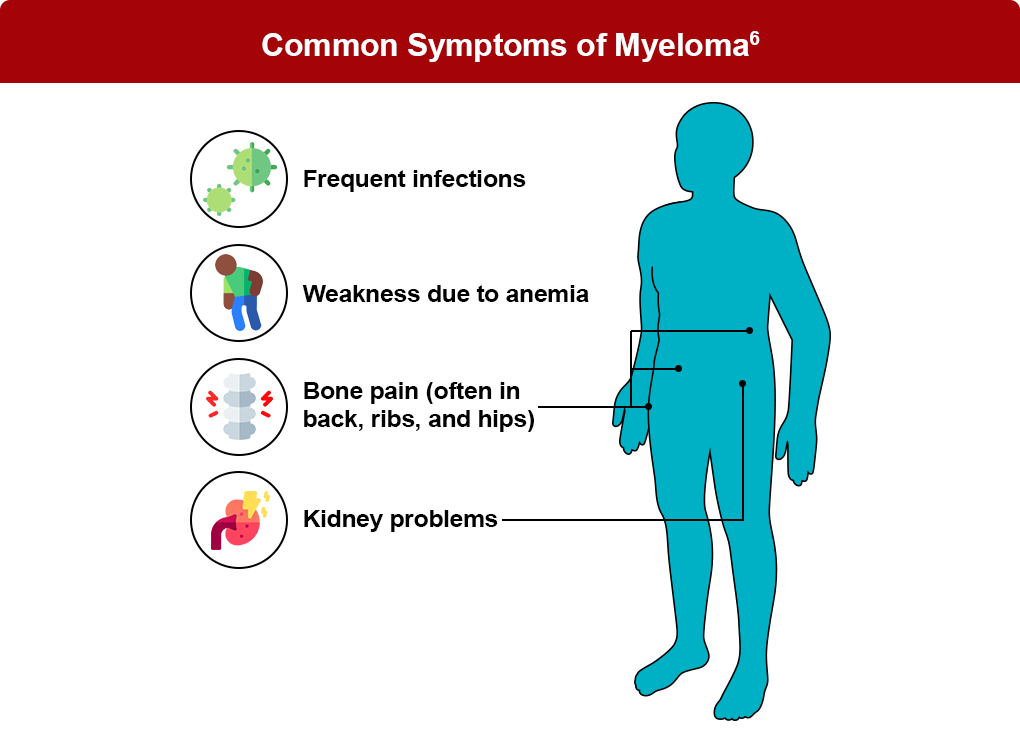
Multiple myeloma affects the bones and bone marrow and often results in bone pain, fatigue, and frequent infections.5
Myeloma can also cause anemia, which can contribute to fatigue. Your tendency to bruise or bleed might increase, as platelet counts may decrease.5 Monitoring your platelet counts and kidney function is an important part of treatment, as kidney damage can also occur.5
What are the different types of multiple myeloma?
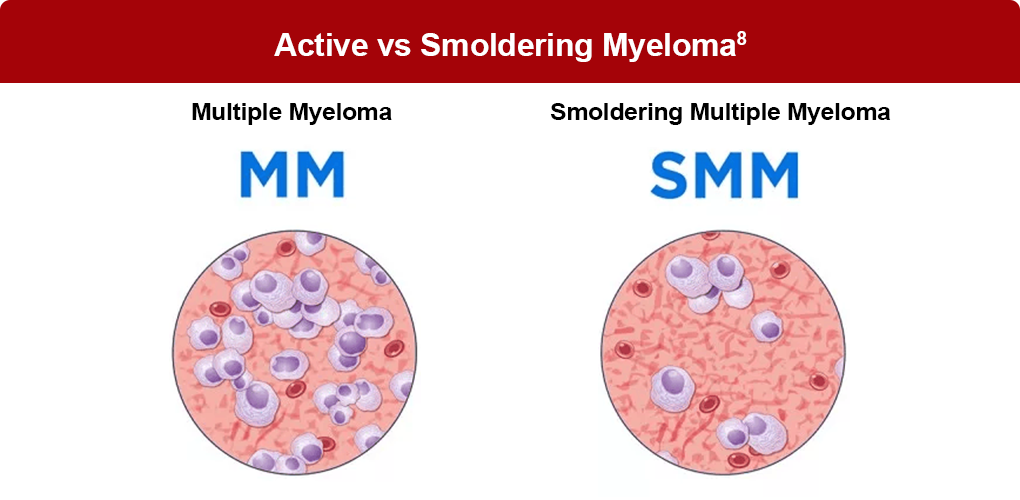
The two main types of multiple myeloma are classified as active and smoldering. Unlike smoldering multiple myeloma, active myeloma causes symptoms, affects organs, and often develops in patients who previously had smoldering disease.7
Smoldering myeloma usually does not require immediate treatment, but involves regular monitoring that can help identify important clues that the condition is progressing.7 This may include a high level of M-protein, kidney problems, bone lesions, high calcium, low red blood cells, and other signs. While myeloma that is causing symptoms should be treated, results from certain lab tests can also show that it is time to begin treatment.3,7
How prevalent is multiple myeloma?
Multiple myeloma is the second most common blood cancer in the United States, and it is the most common blood cancer for Black patients.9,10 For 2025, the National Cancer Institute projected the diagnosis of 36,110 new cases of multiple myeloma in the United States.11
How is the diagnosis of multiple myeloma made?
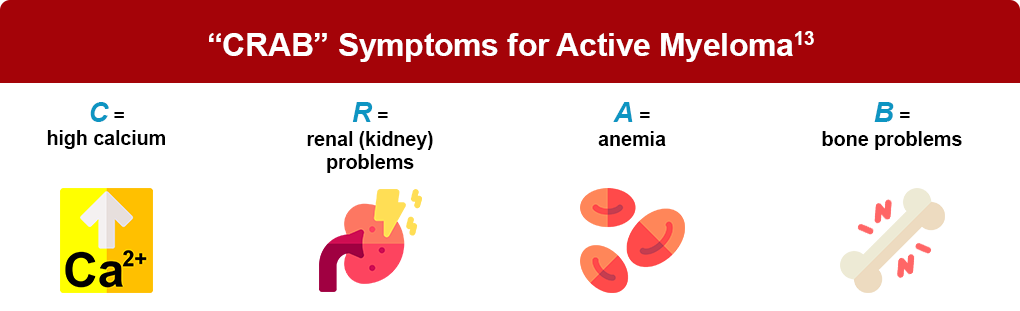
A diagnosis of multiple myeloma usually requires a bone marrow biopsy showing either a plasmacytoma or at least 10% clonal plasma cells in the bone marrow. In addition, doctors look for one or more of the following12:
- CRAB findings, which include high levels of calcium in the blood, kidney problems, anemia, or lytic lesions (damaged bone appearing as holes on X-ray)
- Increase in the relative amount of a type of light chain found in the blood
- A level of plasma cells in the bone marrow >60%
- Multiple focal lesions on magnetic resonance imaging (MRI)
References
- Cleveland Clinic. Multiple Myeloma. August 8, 2025. https://my.clevelandclinic.org/health/diseases/6178-multiple-myeloma
- National Cancer Institute. Plasma Cell Neoplasms (Including Multiple Myeloma) Treatment (PDQ®)–Patient Version. November 17, 2023. https://www.cancer.gov/types/myeloma/patient/myeloma-treatment-pdq
- National Comprehensive Cancer Network®. NCCN Guidelines for Patients. Multiple Myeloma, 2026. https://www.nccn.org/patients/guidelines/content/PDF/myeloma-patient.pdf
- City of Hope. Multiple myeloma causes and risk factors. 2025. https://www.cancercenter.com/cancer-types/multiple-myeloma/risk-factors
- Moffitt Cancer Center. Multiple Myeloma Symptoms. June 6, 2022. https://www.moffitt.org/cancers/multiple-myeloma-plasma-cell-tumor/signs-symptoms/
- Christiansen S. What Is Multiple Myeloma? Verywell Health. December 3, 2025. https://www.verywellhealth.com/multiple-myeloma-overview-4586928
- International Myeloma Foundation. What are MGUS, Smoldering Multiple Myeloma, and Active Myeloma? March 6, 2026. https://www.myeloma.org/what-are-mgus-smm-mm
- Adapted from: Memorial Sloan Kettering Cancer Center. Multiple Myeloma. July 13, 2023. https://www.mskcc.org/cancer-care/types/multiple-myeloma
- International Myeloma Foundation. What is multiple myeloma? FAQs. https://www.myeloma.org/myeloma-cancer-questions
- Mikhael J, Bhutani M, Cole CE. Multiple myeloma for the primary care provider: A practical review to promote earlier diagnosis among diverse populations. Am J Med. 2023;136:33-41 DOI: 10.1016/j.amjmed.2022.08.030.
Siegel RL, Kratzer TB, Giaquinto AN, et al. Cancer statistics, 2025. CA Cancer J Clin. 2025;75:10-45. doi:10.3322/caac.21871
- Rajkumar SV. Multiple myeloma: 2022 update on diagnosis, risk-stratification and management. Am J Hematol. 2022;97:1086-1107. doi:10.1002/ajh.26590
- Cancer Support Community. Multiple Myeloma. https://www.cancersupportcommunity.org/multiple-myeloma
ALL URLs accessed April 18, 2026
